The York College of Pennsylvania Forensic Chemistry graduate has built a career using science to help investigators uncover answers in complex death investigations.
Sara Gagen grew up drawn to mystery. While other kids were watching cartoons, she was tuning in to Matlock, Magnum, P.I., and Murder, She Wrote.
“I always got super into the who-done-it aspects of the crime,” Gagen says.
Years later, that curiosity led her to a career. Gagen, a 2011 York College of Pennsylvania Forensic Chemistry graduate, works at NMS Labs in Horsham, Pennsylvania, where she has spent nearly 15 years in forensic toxicology. Her work has contributed to testing in cases ranging from routine forensic sampling to nationally known death investigations.
Gagen’s work has always been about furnishing scientific answers when families, investigators, and medical examiners need them most.
“You’re providing unbiased answers to help people get closure,” she says. “You can provide that science element to help them heal without having to be at the scene.”
York College offered her the right fit
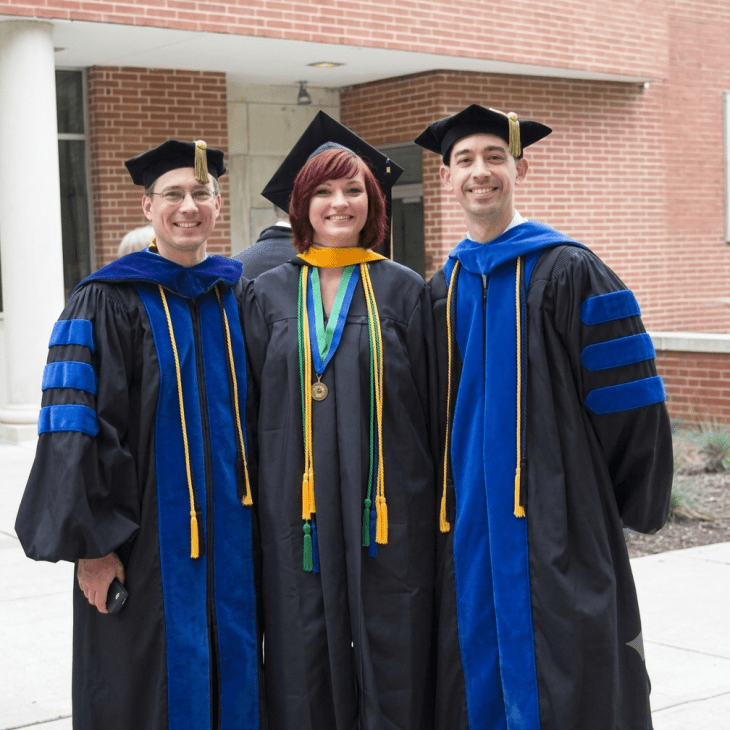
Gagen knew she wanted to attend a college with a forensic chemistry program specifically. At the time, few colleges offered the type of accredited degree she was seeking. But York College did.
She liked the campus, the school’s size, the distance from her home in New Jersey, and the fact that the program aligned closely with the career she imagined for herself.
“York [College] checked all of my boxes, and I really fell in love with the campus,” she says.
Technical skills that made a difference
Gagen graduated from York College and entered the forensic toxicology field with experience in a wide range of laboratory techniques and the use of instruments. The hands-on labs provided her with a background that undergraduates at many other institutions did not receive. The exposure helped her understand the technical demands of laboratory science before she began her career.
Through networking dinners, alumni connections, an internship, and independent study, she began to understand where she might fit within the field.
While working at NMS Labs, she earned a master’s degree in Forensic Toxicology from the University of Florida.
The skills beyond the science
Gagen serves as an NMS Labs Supervisor. She manages a team of 16, creates schedules, troubleshoots issues, supports validation of test results, assists with instrument maintenance, and still helps to prepare patient samples.
“My job is now more of a people manager position, but I’m still very technical,” she says.
For students interested in forensic chemistry, toxicology, or laboratory science, Gagen says technical knowledge matters, but it’s not the only thing that matters. Common sense, patience, curiosity, professionalism, ethics, and adaptability are essential in a field that constantly is evolving.
“One of the biggest skills is welcoming change,” she says.
Gagen’s advice to college students is to keep pushing forward, even when that’s difficult. She encourages them to take advantage of tutoring, build relationships with professors, seek internships, and learn what type of lab environment most interests them.