

Neuroscience
Program Type
B.S.
Est. Time to Complete
4 Years
School
Kinsley School of Engineering, Sciences and Technology
Delivery Mode
On Campus
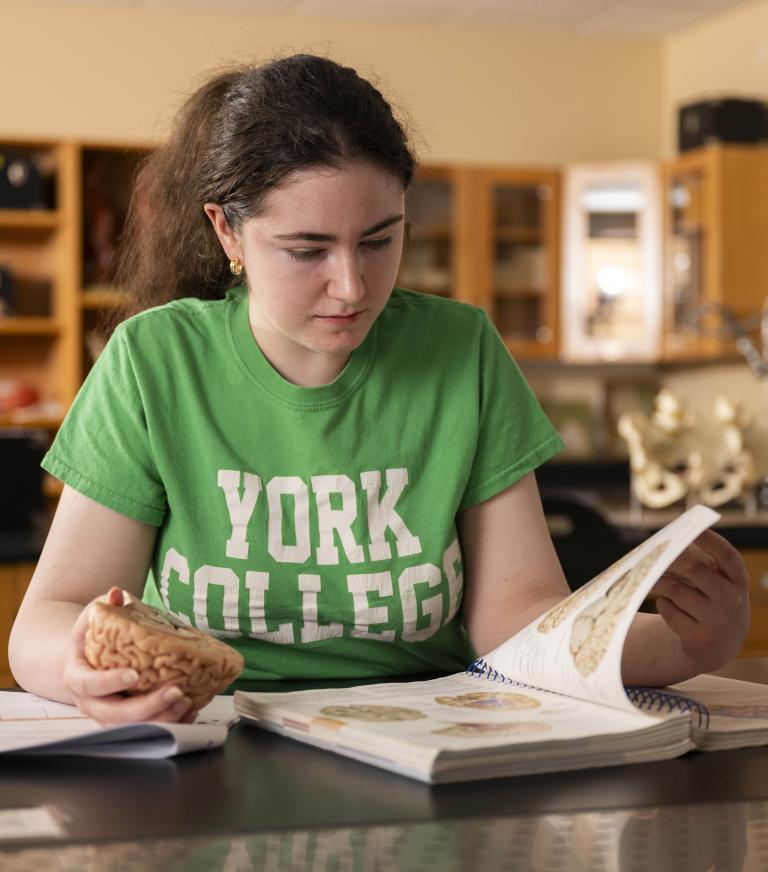
Explore the brain from molecules to behavior as a Neuroscience major.
York College of Pennsylvania's Bachelor of Science (BS) in Neuroscience degree program provides foundational knowledge on the brain from all biological levels of organization. As a Neuroscience major, you'll integrate laboratory experiences and student-led research projects while building critical thinking skills and advanced scientific expertise.
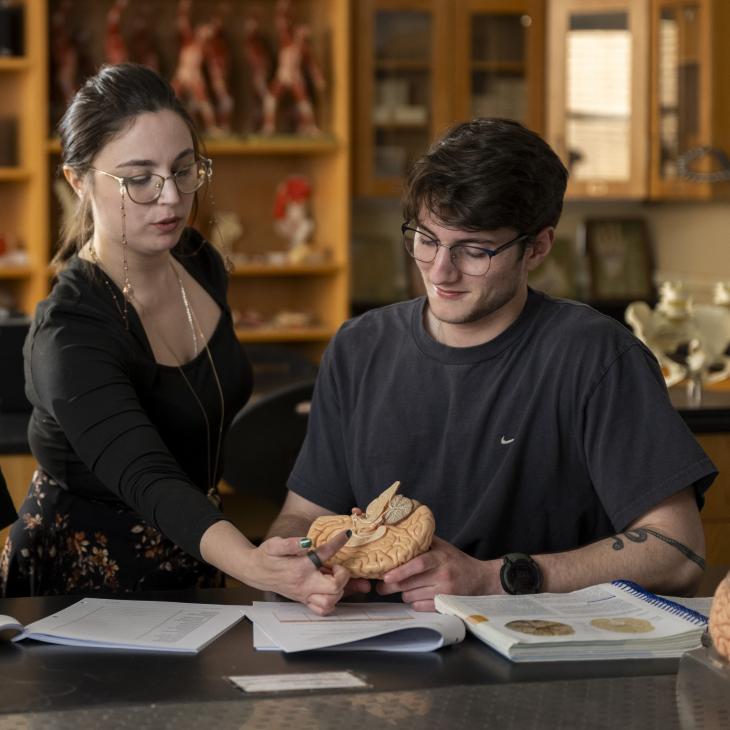
Go beyond textbooks to understand how the brain works, from neurons and neural circuits to complex behaviors and cognitive processes. Gain hands-on experience in state-of-the-art facilities and prepare for careers in research, healthcare, or graduate study.
About the Bachelor of Science in Neuroscience
Neuroscience Major Requirements
Students in the Neuroscience degree program build a strong interdisciplinary foundation in biological sciences, psychology, chemistry, physics, and mathematics. This comprehensive approach integrates multiple perspectives on brain function and behavior.
Requirements for the Bachelor of Science in Neuroscience include a minimum of 120 undergraduate course credits.
Neuroscience Program Courses
Study areas include cellular neuroscience, neuroanatomy and neurophysiology, cognitive psychology, brain and behavior, and research methods. Laboratory and research opportunities are integrated throughout the curriculum, beginning in your first year. You may take core courses such as:
- BIO 340: Human Neuroanatomy and Neurophysiology
- BIO 360: Neurobiology
- PSY 210: Fundamentals of Biopsychology
- PSY 307: Cognitive Psychology
- PSY 310: Brain and Behavior
Admissions and Aid
Emerge from your Neuroscience degree program ready and confident to take on the challenges of scientific careers and rigorous graduate study. To take the first step, we are here to assist you in completing the seamless, rolling-deadline undergraduate admissions process.
Learn about costs and financial aid at York College to understand tuition and reach out with any questions.
Earn a B.S. in Neuroscience at York College of Pennsylvania
If you're curious about how the brain works and want to explore neuroscience through hands-on research and laboratory experiences, York College's Bachelor of Science in Neuroscience program empowers you to make real discoveries in each course you take.
Get started with a request for information. Or begin an online application.
Career Preparation
The tailored coursework, research, and internship opportunities in the Bachelor of Science in Neuroscience program open many possibilities for future careers. Neuroscience majors can pursue roles in research, healthcare, biotechnology, education, or pharmaceutical industries, or opt for graduate school in biomedical fields, medicine, dentistry, psychology, or other health professions. Popular pathways include:
- Scientific research at educational institutions or research institutes
- Laboratory technician roles in clinical or research settings
- Postsecondary education and teaching
- Medical careers as neurologists, physician assistants, or psychiatrists
- Healthcare professions including dentistry and pharmacy
- Working in pharmaceutical and biotechnology industry laboratories
Because students with a neuroscience degree are broadly trained in the biological sciences, this major serves as excellent preparation for further graduate training in a variety of health fields. The proposed neuroscience degree meets the primary course entrance requirements for numerous health professions graduate programs.
Salary and Outlook
The field of neuroscience offers competitive entry-level salaries and a variety of workplaces and industries to choose from. According to the Bureau of Labor Statistics, the job outlook for the 2023-2033 decade ranges between 5-28% in growth compared to other professions, which is faster than average.
With a bachelor's degree in Neuroscience, students can expect to pursue roles with average annual salaries that look like the following:
- Neurologist—$270,470/year
- Psychiatrist—$256,930/year
- Dentist—$179,210/year
- Pharmacist—$137,480/year
- Physician Assistant—$133,260/year
- Biological Scientist—$91,100/year
- Biological Technician—$52,000/year
While wages vary by location and job description, neuroscience graduates are well-positioned for careers across research, clinical, and educational settings.
Undergraduate Research
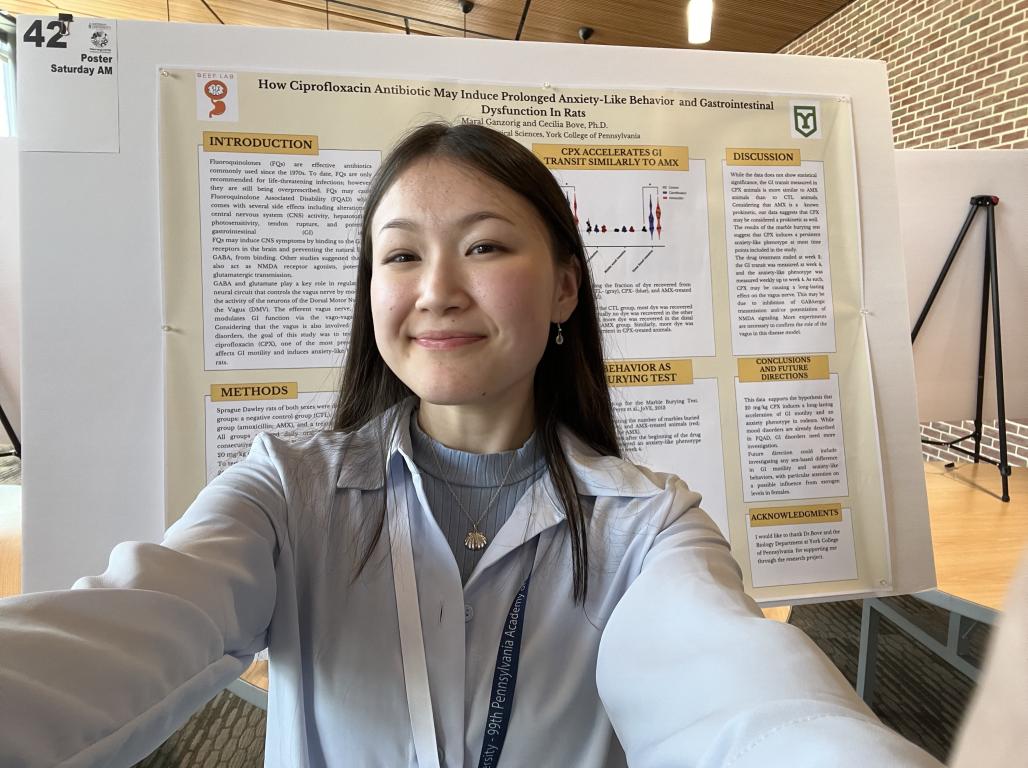
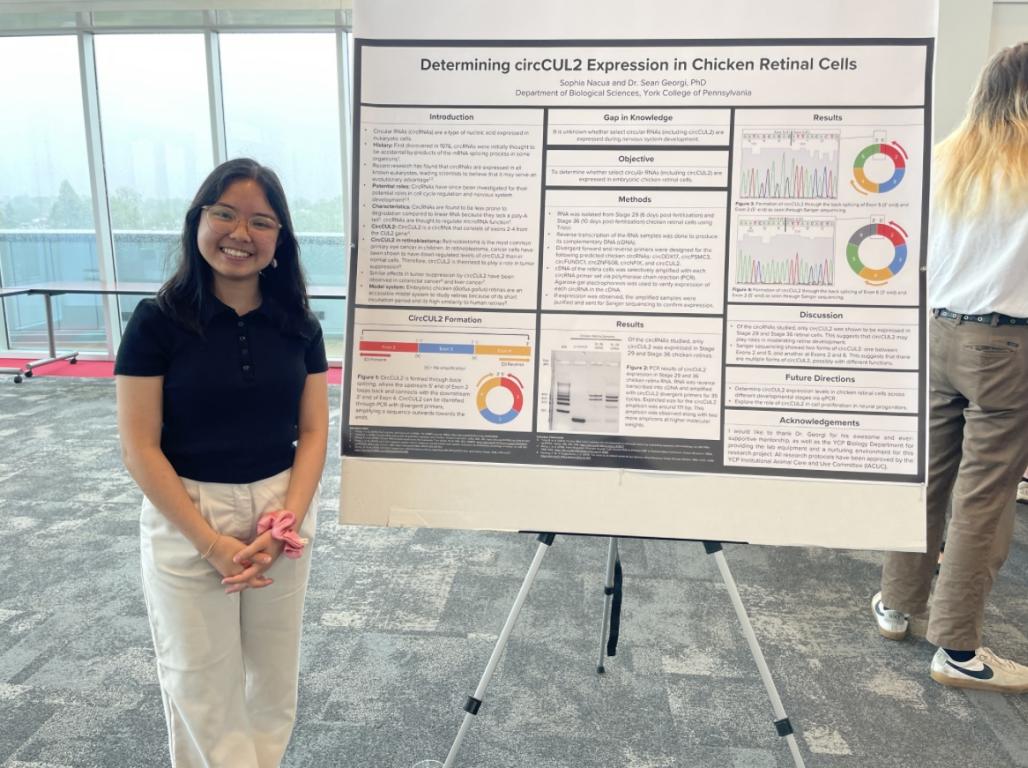
Each student in the Neuroscience degree program will participate in curriculum-based undergraduate research. As a member of the Council on Undergraduate Research (CUR), York College of Pennsylvania is an excellent place to experience rigorous, hands-on, and independent research firsthand. The Undergraduate Research Showcase is an annual event where students from various YCP majors display their work and discuss their findings with others.
Students in their third year will complete a yearlong research series exploring scientific literature, developing a group research project with faculty guidance, and conducting self-designed research from data collection through analysis and presentation. Neuroscience majors will also have the opportunity to work one-on-one with faculty members to design and carry out independent research projects.
Graduating from this program will give students skills that are highly valued by pre-professional and graduate programs, including critical thinking, written communication, and quantitative and qualitative reasoning.
Internships and Work Opportunities
Faculty involved in the Neuroscience major have historically provided avenues for students to participate in optional summer internships and paid, unpaid, and credit-bearing work experiences. Summer internships can also include working with local organizations and companies such as Eurofins Lancaster Laboratories.
On-campus work opportunities related to neuroscience include lab assistantships and tutoring positions, allowing students to gain practical experience while supporting their education.
Meet and Work With Experts in the Field
Neuroscience faculty at York College are actively engaged in research and professional development, providing students with direct access to experts in the field. Our small class sizes mean you'll build meaningful relationships with faculty from your first semester, not just as instructors but as mentors guiding your academic and professional journey.
Our reputation for accessible, hands-on mentorship is so strong that students from neighboring institutions have sought out our faculty for summer research opportunities, citing the personalized attention and authentic research experiences that can be difficult to find at larger universities.
Career Support and Student Organizations
York College has a wide variety of student clubs and organizations of various interests. Organizations range from academic honor societies to Greek living, from drama to publishing, from exploring cultures to joining student government.
Student organizations related to the Neuroscience program include:
- Pre-Medical and Allied Health Society
- Women in Science and Engineering (WISE)
- Tri-Beta Biology Honor Society
- Biology Club
Technical and Professional Skills
The valuable skills learned in the B.S. in Neuroscience degree program provide students with a diverse skill set. Graduates of the B.S. in Neuroscience degree program develop the technical and professional skills needed to succeed in research, medical programs, and professional careers:
- Ability to design and perform scientific studies
- Analyze and interpret data
- Critically analyze scientific information from various sources
- Communicate scientific ideas ethically and effectively to a variety of audiences
- Teamwork and collaboration
- Ethical conduct in research
- Safe use of laboratory equipment
Neuroscience students will proactively engage with career-readiness to develop professional identities, behaviors, skills, and practices through continual reflection on their strengths and areas for growth, exploration of career and professional opportunities, and networking to build relationships. Our faculty will provide opportunities to participate in professional events such as local and national conferences, and opportunities to practice resume building and interviewing skills to complement the rich research opportunities provided by the department.
Neuroscience Courses
Your class schedule will include core courses for your major, Gen Next general education classes, and electives.
| Course Name | Course Code | Credits |
|---|---|---|
| Fundamentals of Biopsychology | PSY 210 | 3 Credits |
| Human Neuroanatomy and Neurophysiology | BIO 340 | 4 Credits |
| Neurobiology | BIO 360 | 4 Credits |
| Cognitive Psychology | PSY 307 | 3 Credits |
| Brain and Behavior | PSY 310 | 3 Credits |
Careers in Neuroscience
Biological Scientist
Biological Technician
Neurologist
Psychiatrist
Physician Assistant
Pharmacist

Build your dream career, one day at a time.
This is day one. From your first semester on campus through graduation day, York College offers expert advice, professional development opportunities, and personalized support to help you navigate the choices that influence your future.
Explore resources for a successful college experience:
Meet the Faculty
View All Faculty



Neuroscience in Action
View All News
Related Programs
Biology, B.S.
A degree in Biology opens up career possibilities in a wide range of industries: laboratory research, healthcare, environmental conservation, and more. At York College, our bachelor of science in Biology serves as an opportunity for you to explore your options with guidance from faculty experts—whether you come in knowing exactly which branch of biology interests you, or need some time to figure it out.
Psychology
The Psychology major provides students with the necessary background to pursue a number of professional careers within and related to psychology. Whether you’re interested in clinical practice, research, healthcare, community health, education, or any other field—this dynamic program allows you to pursue your passion.
Premedical Sciences
York College of Pennsylvania’s Bachelor of Science (BS) in Premedical Sciences degree program prepares students academically and holistically for competitive pre-professional programs in medicine. If you aspire to pursue a career in medicine, this premed major program offers a comprehensive education in the essential sciences and the foundation necessary for the rigors of medical school, dental school, PA school, pharmacy school, and more.